













Logo

7Signs Casino App In Italy

2026 Analysis for users in Italy who want quick access, a readable smartphone account, and more controlled sessions.

Fortune Gems 2 Slot

Table of Contents

  • The Dog House Megaways Slot
  • Lucky Joker 10 Extra Gifts Slot
  • Sword of Ares Slot
  • Floating Dragon Hold & Spin Slot
  • Leprechaun Riches Slot
  • Fruit Cocktail Slot
  • The Dog House Megaways Slot
  • Sword of Ares Slot
  • Fruit Million Slot
  • The Dog House Megaways Slot
  • Big Fisherman Slot
  • Big Fisherman Slot
  • Seven Books Unlimited Slot
  • 7signs Fortune Slot
  • Sword of Ares Slot
  • Floating Dragon Hold & Spin Slot
  • 9 Mad Hats Slot
  • Floating Dragon Hold & Spin Slot
  • Big Bass Splash Slot
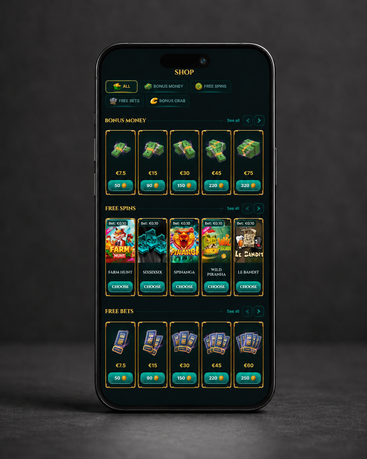
App 1

How 7Signs Mobile Fits Into Busy Days

The platform available in Italy is judged in seconds when opened from a phone. It's not enough for the menu to be nice. It must be easy to read, fast to use, and organized enough to guide the user from login to the lobby without making them go in circles between similar screens. For those who use usa smartphone every day, the real value isn't the initial effect, but the fluidity of the most common transitions.

Imagine a twelve-minute break between work and returning home. Usually, an adult user checks their balance, enters the history, opens a familiar title, and quickly decides whether to stop there or not. If, however, the cashier, profile, and lobby seem to be in three different corners of the platform, even a short access becomes dispersive.

In 2026, this difference weighs even more. Those who usa digital services often on smartphones expect a precise logic: few taps, readable buttons, pages that don't force you to zoom or restart. When the structure is coherent, the platform stops seeming like a hastily adapted site and starts behaving like a tool truly designed for short, controlled sessions.

Why The Phone Changes Gaming Habits

The smartphone changes everything because it shortens the time between idea and action. If you're on the sofa, on the train, or waiting for an appointment, opening the platform requires almost zero preparation. Precisely for this reason, more order is needed, not less. Imagine logging in just to check your balance and finding yourself twenty minutes later still in the lobby. This usually doesn't happen by reasoned choice, but because the phone makes access too immediate if no limits are set beforehand.

Where The Quality Of The Interface Is Immediately Noticeable

The interface is judged on the most practical points. How easy is it to find the history? Does the cashier open immediately or remain hidden behind secondary menus? Does the balance remain visible at important moments or disappear when it's most needed? These are small details, but they determine whether the user feels oriented or not.

If you are using the phone with one hand, perhaps while waiting for a taxi or a friend, these details matter even more. Usually, the more cautious player always looks for the same three things before starting: personal area, updated balance, and quick access to recent games. When they find them immediately, the tone of the experience changes.
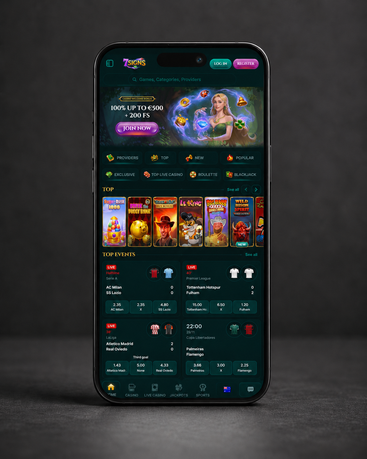
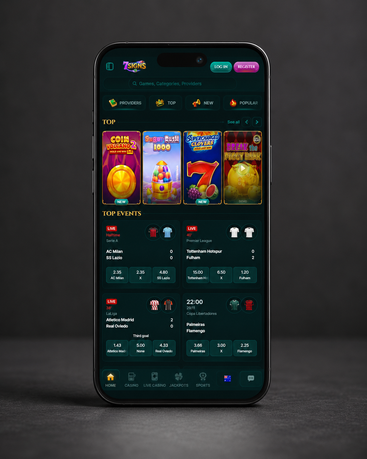
application 2

Registration, Cashier And First Deposit With Method

Registration is the first real test. Many users believe that the quality of the platform is measured when the first game starts, but in reality, the answer comes much earlier, namely when creating the account. A tidy profile, with legible fields and clear instructions, already says a lot about the rest of the experience.

Imagine registering in the evening, when you have little patience and want to do everything quickly. That's usually when the most trivial errors are made: a poorly written email, a data entered without rechecking, a step skipped because the menu seemed unclear. Therefore, it is advisable to treat account opening as a concrete procedure, not as an obstacle to be overcome as quickly as possible.

After the profile comes the cashier, which for many users is the most important section along with the history. Here, it's not just about understanding how to deposit. It's also about checking if the area is readable from a smartphone, if recent transactions are easy to check, and if the tools for setting limits or breaks are really at hand. A simple-to-view cashier is often worth more than a lobby full of categories.

The first deposit, then, should have a precise function: to test the process. Not to show enthusiasm, not to chase a result, but to understand if the amount, confirmation, and updated balance are displayed clearly. If the procedure seems orderly with a moderate amount, it is easier to evaluate the rest of the platform with clarity.

A Simple Path Before The First Session

The most sensible path is almost always this: open the profile, check the data, visit the cashier, see where the history and pause tools are located, then decide whether to make the first deposit. If you are using the phone during a short break, the temptation is to skip half the checks. Usually, however, problems arise precisely there, in the hurried transition from registration to game without truly understanding how the account works.

When App 7Signs Makes More Sense On Smartphone

La versione da smartphone ha più senso quando l'utente sa già come usa il proprio tempo. C'è chi entra due volte al giorno per pochi minuti, chi fa un accesso solo la sera e chi apre il conto soprattutto per controllare saldo, cronologia e movimenti. Non esiste un uso giusto in assoluto. Esiste un uso coerente con il proprio ritmo.

App 3

Imagine two different people. The first logs in while waiting for the train, plays a short session, and wants to close quickly. The second prefers to sit down calmly at the end of the day, check their account, and choose more carefully. Usually, both can feel comfortable on a smartphone, but only if the platform doesn't force them to search for the same functions every time.

This solution makes sense especially for those who consider the phone their main tool and not a fallback. If the service is well organized, the advantage is clear: quick access, frequent checks, simple account management. If, on the other hand, the interface seems designed for a large screen and then reduced, the smartphone becomes a compromise instead of a strength.

Game Choice, Rhythm And Visual Comfort

Choosing games on the phone doesn't work like on a desktop. On a small screen, you scroll less, compare less, and decide faster. This is not a flaw. It's simply a different behavior. Precisely for this reason, the platform should help narrow down the field instead of pushing the user into a lobby that is too large, noisy, or poorly filterable.

If you have ten minutes, you usually don't want to open thirty categories. You want to immediately understand where the recent titles are, which sections are best suited for a short session, and how to quickly go back if the first attempt isn't convincing. Imagine a lunch break: the disciplined player doesn't look for random novelties, they look for fluidity.

Visual comfort also matters. A title that appears clear on a large screen can become uncomfortable on a smartphone if the controls are tight, the text is compressed, and information is pushed too far to the edges. In those cases, the user doesn't always interrupt the session immediately. They often stay, but start playing with less attention and more automatically. That's where the quality of the experience really begins to lose value.

Area Da Valutare

Cosa Controlla L'Utente

Why It's Useful

Lobby Principale

Accesso rapido ai titoli recenti

Riduce il tempo perso tra le categorie

Personal Area

Saldo, cronologia e profilo

Aiuta a verificare il conto prima e dopo

Sezione Pagamenti

Metodo, importo e stato dei movimenti

Rende più chiara la gestione del denaro

Strumenti Di Limite

Soglie di spesa o pause

Favorisce un uso più ordinato

Navigazione Generale

Menu, filtri e ritorno alle sezioni

Avoid unnecessary touches on a small screen

How to Reduce the Lobby Without Wasting Time

Reducing the lobby doesn't mean using it poorly. It means entering with a precise question: how much time do I have, what do I want to do, when do I want to leave? If the answer is clear, the number of steps reduces itself. Imagine having only fifteen minutes before dinner. Usually, the best choice is not to explore everything, but to return to a known title or a category already understood.

The Right Moment To Stop

Stopping at the right moment is more difficult on a phone precisely because the phone is always nearby. There isn't the small ritual of opening the laptop, sitting down, organizing yourself. Here, a touch is enough. That's why the exit point should be thought of beforehand, not during.

If you start without a rule, the session extends almost without you noticing. It can be a time limit, a spending limit, or simply the decision to make only one login. Imagine logging in after a tiring day telling yourself, 'just five minutes.' Usually, that kind of vague promise holds up less than a concrete rule.

Short sessions and long sessions are not managed the same way

Short sessions work best when everything is simple: quick access, familiar game, checked balance, and clear exit. Longer ones, however, require different management, with breaks, account checks, and more attention to how the rhythm changes over time. If you're on your phone out of habit, the two models tend to blur. Imagine logging in for a quick check and still being there half an hour later: it's precisely this overlap that should be avoided.

Support, History & Control Tools

Support isn't just for when something obviously goes wrong. It's also for the small uncertainties that arise at the most inconvenient times: a page that updates poorly, a move that doesn't appear immediately, a doubt about the status of an operation. On smartphones, these episodes weigh more because the user expects speed and clarity at every step.

History, in this sense, is one of the most useful areas of the entire platform. It doesn't just tell you if an action was recorded. It tells you how you actually used your account. How many logins did you make? Did you check the cashier multiple times? Did you play longer than expected? Imagine opening your history the morning after a session. It's often there that you realize the real rhythm, not the one you remembered.

Control tools should also be close to these sections, not hidden at the bottom of your profile. An adult user who wants to use the platform in compliance with applicable rules and their personal limits tends to always look for the same functions: check activity, set a limit, take a break. If these options are visible, account management becomes clearer.

Imagine realizing that in the last few evenings you've opened the platform more often than expected. Usually, the first useful step isn't to promise yourself that tomorrow will be better. It's to use a concrete tool, even a brief one, that interrupts the automatic repetition. The advantage of a good structure lies precisely here: transforming a vague intention into a simple action.

What to Do If A Page Doesn't Load Properly

When a page doesn't load, the most useful move is not to repeat the action immediately. First, check your connection, close background apps, refresh the screen, and verify if the operation already appears in your history. If you're switching from Wi-Fi to mobile data, the problem often arises there. Usually, these checks are enough to determine if you really need assistance or not.

When to Use Temporary Break or Self-Exclusion

A temporary break makes sense when you feel the frequency is increasing, you open your account too often, or you're playing more on impulse than by choice. Self-exclusion, on the other hand, is a stronger tool, designed for times when light rules are no longer enough. These are not dramatic measures. They are management tools.

Imagine returning to the platform three or four times in the same evening after already deciding to stop. This is usually the clearest sign that a practical barrier can help more than just willpower. The point isn't to punish yourself. The point is to re-establish distance between impulse and access.

Who Is The Platform Suitable For In 2026

In 2026, this platform can make sense especially for those who prefer the phone as their primary tool and want a simple path: access, account check, quick title selection, clean exit. It's not necessarily the ideal solution for those who like to compare many sections at length or manage everything from larger screens. It's more suited for those who know what they're looking for and want to find it in a few taps.

Immagina due utenti maggiorenni in Italy. Il primo usa il telefono quasi per tutto, entra spesso ma per periodi brevi e controlla regolarmente saldo e cronologia. Il secondo preferisce sessioni più lunghe e navigazione lenta. Di solito il primo percepisce di più il valore di una piattaforma ben costruita per smartphone, mentre il secondo tende a pesare maggiormente altre esigenze.

Overall, the mobile experience becomes valuable when it accompanies concrete actions without creating friction: opening the account, immediately understanding where essential functions are, checking movements, setting limits, stopping when needed. Grand promises aren't necessary. A structure that holds up well to real habits is needed.

FAQ

The most effective way to start is to divide the process into four clear steps: registration, data verification, cashier visit, and only then the potential first session. Many users do everything in reverse because they are in a hurry, but this way they risk not understanding where the history, limits, and break tools are. If you enter calmly and use the first login to orient yourself, account management immediately becomes clearer.

Often yes, because the smartphone is perfect for quick logins, balance checks, and sessions with a specific goal. However, this works well only if you've already decided beforehand how much time to dedicate and with what spending limit. Otherwise, the convenience of the phone can turn a short visit into a continuous presence, made up of repeated openings and almost automatic account checks.

Before depositing, it's worth checking three areas: the cashier, the history, and the personal area. The cashier shows you if the process is clear, the history helps you understand where the movements will appear, and the personal area shows you if the control tools are easy to find. It's a simple check, but it often makes the difference between conscious use and a too-hasty start.

You usually realize it when you lose the original reason you logged in. If you opened the account for a few minutes and after half an hour you're still scrolling through categories without direction, the session has already changed nature. Another useful sign is the number of times you return to the cashier or history without a specific reason. In those cases, stopping for a moment and truly closing can be the most lucid choice.

Opening the history the next day is often more useful than just checking it during the session. With a cool head, you can better see how many logins you made, how often you checked your balance, and if the usage rhythm stayed within the limits you set for yourself. Memory tends to recall the highlights. History, however, shows the real sequence of actions.

A temporary break makes sense when you feel the platform is entering your days too automatically. Perhaps you reopen your account several times in the evening, continuously check the balance, or log in when you hadn't planned to. In these cases, a short break can interrupt the rhythm before it becomes a habit that is harder to manage. It's not an extreme choice, but a practical tool for order.

The first thing is to avoid repeated taps. It's better to check the network, refresh the page, close any apps running in the background, and check the history to see if the operation has already been registered. On smartphones, many problems arise from connection changes or an incomplete screen update. If the situation remains unclear after these checks, then it makes sense to ask for support by precisely describing what happened.

EN