













Logo

7Signs Login In 2026

A practical guide to account, payments, support, and control tools for adult users in Italy.

Fortune Gems 2 Slot

Table of Contents

  • The Dog House Megaways Slot
  • Lucky Joker 10 Extra Gifts Slot
  • Sword of Ares Slot
  • Floating Dragon Hold & Spin Slot
  • Leprechaun Riches Slot
  • Fruit Cocktail Slot
  • The Dog House Megaways Slot
  • Sword of Ares Slot
  • Fruit Million Slot
  • The Dog House Megaways Slot
  • Big Fisherman Slot
  • Big Fisherman Slot
  • Seven Books Unlimited Slot
  • 7signs Fortune Slot
  • Sword of Ares Slot
  • Floating Dragon Hold & Spin Slot
  • 9 Mad Hats Slot
  • Floating Dragon Hold & Spin Slot
  • Big Bass Splash Slot

How to Use 7Signs Casino Login Seamlessly

For many users, the point isn't just to log in, but to log in correctly. A quick login, with poorly saved data or the wrong device, can turn a ten-second process into a series of repeated errors. Imagine opening your account after dinner, with little time available and the idea of a short session. At that moment, you don't want to look for technical solutions: you want to reach the lobby without unnecessary blocks.
Login 1

The most useful procedure is also the simplest. Check the contact details associated with the account, re-read the password, and verify if the browser is autofilling old data. It seems trivial, but a huge part of the problems arises right here. Those who usa multiple profiles on the same computer, or frequently change phones, easily find themselves with credentials that seem correct but actually belong to a previous session.

It's also worth distinguishing between a failed login and a suspended session. In the first case, there's usually a mistyped entry. In the second, an additional verification or too many consecutive attempts often come into play. If you keep pressing the same button without reading the on-screen message, you risk prolonging a problem that was small at the beginning.

Before Logging In, Routine Matters More Than Haste

Routine almost always beats speed. If you use a password manager, check that it has saved the correct profile. If you log in from mobile, verify that the keyboard hasn't automatically changed a character. Imagine trying to log in while walking, receiving notifications, and switching networks between mobile data and Wi-Fi. In that situation, it takes very little to type incorrectly. Stopping for a moment before confirming is often the fastest choice overall.

What Changes With 7Signs Login On Different Devices

The same account can seem simpler or more cumbersome depending on the screen you use to access it. On a computer, you have more space to view your balance, settings, and history. On a phone, on the other hand, you gain speed but lose some attention to detail. Imagine wanting to check a transaction while you're out, with a small screen and notifications appearing over the page. It works, of course, but it's not always the ideal context for making changes or important decisions.

Login 2

Many adult users in Italy use two different logics. Mobile for quick access or a short session. Desktop for more delicate checks, such as reviewing transactions, managing budgets, or reading support messages. Neither habit is absolutely better, but it's useful to understand what you're asking of the device at that moment.

When the phone really helps

The phone is convenient if you want to log in in seconds, check your balance, or have a short session. Imagine you're on a break and only have twenty minutes. In that case, the speed of mobile makes sense. It becomes less practical, however, when you need to review data, set limits, or carefully read a verification request.

Why the computer remains useful in the most delicate phases

On a larger screen, it's easier to read everything without skipping lines or buttons. If you're checking a withdrawal, an account change, or a customer service request, the desktop often reduces errors due to distraction. Imagine wanting to change an important detail while receiving continuous messages on your phone. The risk isn't huge, but it's real. That's why many users prefer to postpone these steps until a calmer moment in front of the computer.

How to avoid confusion between saved sessions

One of the most common problems arises from already open sessions or data saved chaotically. If multiple people access the same device, the browser might suggest incorrect credentials without you noticing. Imagine clicking on a suggested login and discovering too late that you're using an old profile. The best solution is usually to keep the device organized: fewer saved profiles, fewer doubts, fewer errors.

Registration, Data, and Initial Verifications

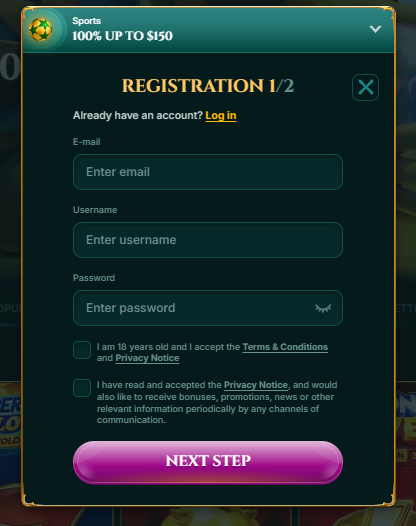
Registration is often treated as a hurdle to overcome quickly. In reality, it's the foundation for everything else. If the data is consistent, the subsequent steps become simpler. However, if you use a secondary email you never check, or enter information carelessly, the account remains formally active but becomes harder to manage when truly needed.

Login 3

Imagine opening your profile late at night, filling everything out on autopilot, and promising yourself you'll check it better the next day. This is precisely how many minor problems arise: unread codes, pending confirmations, unverified phone numbers. The account doesn't collapse, but it starts to require more effort than necessary.

It's worth doing one simple thing: use real contact details that you open every day, and complete the requested confirmations immediately. There's no need to complicate registration with a sophisticated strategy. It just needs to be done right once.

Managing Budget, Deposits, and Withdrawals Methodically

After logging in, the most important decision isn't which game to open, but how much you want to spend and with what logic. Many enter the payments section without having set an amount, then decide everything while already viewing the game catalog. This changes the tone of the session: you stop following a plan and start reacting to the moment.

Imagine wanting to use a specific amount for a short evening. If you decide it before opening the payments area, everything else flows better. If, however, you leave the choice pending, each subsequent screen might push you to revise the budget on the fly. For adult and more controlled use of the platform, this detail matters a lot.

Then there's the issue of method. Often, a single tool used consistently is easier to control than multiple solutions alternated without a real reason. The history remains more readable, the account stays consistent, and even the withdrawal process tends to be less confusing.

Account Activity

What Users Often Do

Why It's Useful

Deposit

They choose a familiar method and recheck the amount

Reduces errors and keeps the budget clear

Transaction Monitoring

They review the history after the session

Helps to immediately understand if something is wrong

Limits

They set a limit before starting

Makes the session more organized

Withdrawal Request

They verify data and selected tool

Avoids delays due to inconsistencies

Break

They activate a short stop when needed

Turns the break into concrete action

Why the Deposit Should Be Considered Before the Game

The deposit is not a technical detail; it's part of the session's strategy. If you choose the amount in advance, it's easier to stay within the limits you've set for yourself. Imagine opening the cashier with the vague idea of 'seeing how it goes.' Usually, that's precisely when the account stops being guided by you and starts being guided by the moment.

Withdrawal seems slower for a simple reason

Money withdrawal is often subject to more checks than deposits. This doesn't automatically mean there's a problem. It means the procedure may include additional steps, especially if you've changed profile details in the meantime or are using a different device than usual. Imagine requesting a withdrawal and, five minutes later, changing your phone number. Even a small change can make the process less straightforward.

Choosing Games Based on Real-Time

A large lobby can be an advantage or a distraction. It depends on how you approach it. Many users waste the first few minutes of their session browsing through categories without really deciding what they want. Imagine having half an hour free before going out. If you start exploring everything, that time ends up being spent more on searching than playing.

To avoid this dispersion, it's best to start with a very concrete question: how much time do I really have? If the answer is 'little,' it's usually better to choose a familiar category and start without too many detours. If, on the other hand, the evening is long, you can afford to compare different paces and evaluate more calmly what interests you.

A Short Session Requires Simpler Decisions

Short sessions reward clarity. You have little time, so you need a short path even in your choices. Imagine waiting for dinner to finish cooking and having a twenty-minute window. It's not the ideal time to explore every section. In similar situations, the most satisfied users are often those who select only one type of experience and stick with it until the end.

Long Sessions Need Structure

When the available time increases, so does the risk of losing track. It's not enough to have more options: you also need to decide the pace. Do you want something quick, do you want a slower game, do you want to alternate? Imagine spending an hour switching screens because no choice seems definitive. The problem, usually, isn't the catalog. It's the absence of a minimal plan before starting.

Support, Timeouts, and Session Control

Support is truly useful when something interrupts a routine that usually works. A code that doesn't arrive, a screen that repeats, a doubt about account movements, a verification that appears at the most inconvenient moment. In these cases, the quality of your request already does half the work. If you explain precisely what happened, from which device, in which phase, and with which message, a helpful response comes more easily.

Imagine writing only 'it doesn't work.' Support will first have to understand the context, then the problem, then the exact moment it appeared. If, instead, you describe everything in order, you make the conversation much more concrete from the beginning. This is not a minor detail: it's often the difference between a quick solution and a long series of messages.

Pause tools are at least as important as support. A deposit limit helps before the session even begins. A timeout is useful when you realize you're continuing more out of inertia than choice. Self-exclusion is a stronger measure, useful when you feel the need for a clearer distance. None of these tools are theatrical. They are, on the contrary, very practical.

Imagine telling yourself several times that you'll try one last time before closing. If this phrase repeats, it means session control is slipping. At that moment, a break is not a defeat. It's a way to decide outside the flow.

When Stopping is Smarter Than Continuing

The difficult part isn't always starting, but understanding when the tone of the session is changing. If you had planned forty minutes and find yourself still there an hour later for no clear reason, it's a signal that it's worth stopping. Pause tools are precisely for this: transforming a vague intention into immediate action, without having to argue with yourself for another ten minutes.

Why Routine Matters More Than Slogans

In 2026, many users judge a platform not by a promise, but by how well the normal actions work. Entering without friction, using the account without doubts, managing the budget, finding a game suitable for the available time, stopping when necessary. Imagine two seemingly similar services. One guides you linearly from login to the session. The other asks for small corrections at every step. After a while, the difference weighs more than any graphics.

For users in Italy, this also matters for a very concrete reason: habits are not all the same. Some play mainly on mobile, others usa the computer in the evening, some frequently check their movements, and others just want a simple and repeatable routine. A convincing platform is one that manages to remain manageable in all these cases, without requiring new effort each time.

FAQ

The simplest way is to use the reset function on the initial screen and follow the steps with the correct contact information linked to your profile. If the message doesn't arrive immediately, it's worth checking secondary email folders or phone notifications before assuming a technical block. Imagine trying different addresses because you're in a hurry. This usually prolongs everything. It's better to stop, verify the main detail, and complete the reset calmly just once.

In most cases, yes, but changing devices may trigger an additional verification. This isn't automatically a problem: it's often just a security check related to accessing from an environment different from the usual one. Imagine always logging in from your home laptop and then opening the account via mobile data while you're out. If an additional request appears, the most useful action is to complete it instead of repeatedly trying again without reading.

First, the amount, then the chosen method, and finally the consistency of the data on your profile. Many users focus mainly on speed, but in practice, it also matters how easy it will be to re-read that transaction later or request a withdrawal without doubts. Imagine using a tool you rarely open and then having to reconstruct everything from memory. A few seconds of extra attention at the beginning are enough to avoid confusion later.

Because money going out is often subject to additional checks compared to money coming in. This doesn't necessarily imply a problem, just a different procedure. If you change your number, device, or account-linked method in the meantime, the process can become less straightforward. Imagine requesting a withdrawal and immediately after changing a profile detail. Even a small detail can trigger additional checks. Keeping the account stable in these cases helps a lot.

It's advisable to use it when you feel that the session is no longer following the initial plan and you are continuing out of automatism. There's no need to wait for an extreme situation. In fact, the break is usually more effective precisely when activated early, at the moment you notice time is stretching or you're changing your mind about the budget without a real decision. At that point, a short stop restores distance and clarity.

Not always. It's the quickest choice for fast access or a short session, but not necessarily the best for reading movements, modifying settings, or handling a delicate request. Imagine checking your account while continuous notifications pop up on the screen. It works, but it increases the chance of missing a detail. Many users use their phone for convenience and their desktop for tasks requiring more attention.

For many adult users, reliability doesn't come from a promotional phrase but from the functioning of daily routine. Clear access, readable payments, understandable history, helpful support, and easy-to-activate control tools: these are the elements that build trust over time. Imagine a service that looks good but is inconvenient in every practical step. After a short while, appearance is no longer enough. A good experience is one that makes normal actions simple, not one that promises too much.

EN