













Logo

7signs Promo Code To Get Started Right

In Italy, adult players can use this 2026 overview to activate offers, manage their account, and stay organized.

Fortune Gems 2 Slot

Table of Contents

  • The Dog House Megaways Slot
  • Lucky Joker 10 Extra Gifts Slot
  • Sword of Ares Slot
  • Floating Dragon Hold & Spin Slot
  • Leprechaun Riches Slot
  • Fruit Cocktail Slot
  • The Dog House Megaways Slot
  • Sword of Ares Slot
  • Fruit Million Slot
  • The Dog House Megaways Slot
  • Big Fisherman Slot
  • Big Fisherman Slot
  • Seven Books Unlimited Slot
  • 7signs Fortune Slot
  • Sword of Ares Slot
  • Floating Dragon Hold & Spin Slot
  • 9 Mad Hats Slot
  • Floating Dragon Hold & Spin Slot
  • Big Bass Splash Slot

Account Overview and First Approach

When a player enters a casino platform, the first impression doesn't come from the chosen game but from the account's organization. It's immediately clear if the structure is clear, if the balance is readable, if the cashier is easy to find, and if the control settings are truly accessible. In Italy, this matters even more, as many users access from smartphones during short periods of the day and don't want to waste ten minutes navigating unintuitive menus.
Promo 1

Imagine a simple situation. You get home, have half an hour free, and want to understand how the account works without turning that visit into a confusing session. In that case, the real value lies not in the initial promise but in the ability to calmly do three things: read the bonus rules, see where the limits are set, and understand how money moves within the profile.

Usually, problems start when this phase is skipped. The player sees an offer, focuses only on the apparent advantage, and proceeds too quickly. Then they reach the cashier without having decided on a budget, enter the lobby without knowing where to stop, and discover late that the account should have been understood better in the first few minutes.

How To Log In Without Confusion

Access works well when the player first decides what they want to do. Do they just want to register? Do they want to check the balance? Do they want to make a first deposit or just read the profile? It seems like a small distinction, but it changes everything. Imagine a user who opens an account just out of curiosity and, without realizing it, ends up in the cashier. If the purpose is not clear, each subsequent screen pulls the session a little further than expected.

The True Role Of The Initial Offer

A useful initial offer is not one that promises the most in abstract, but one that the player can manage without losing control of the pace. Some need more margin to explore the platform, others benefit from a simpler start, with fewer steps and less psychological pressure.

Imagine a player who opens an account after dinner and just wants to understand if the experience seems orderly. If the initial incentive pushes them to do too much, too soon, it's not helping. If, on the other hand, it accompanies the first steps - registration, profile check, budget selection, short first session - then it becomes a truly useful tool.
promotional offer 2

Registration And Initial Settings

Registration seems trivial, but it is actually one of the points where the most annoying errors accumulate. A misspelled address, a weak password, a hastily entered date, or a profile not checked immediately can stop the flow later, just when the player would like to focus only on gaming or payments.

Imagine filling out the form on the couch, with the TV on and notifications arriving every minute. It's the perfect context for typing too quickly. Many users tell themselves they'll correct everything later, but that 'later' often comes at the worst time, when they need to verify data or recover access.

For this reason, it's best to treat registration as a technical phase, not an obstacle to be overcome quickly. Enter the data, double-check it, save the password securely, and then take a tour of your account before even thinking about the first real session.

Where It's Best To Stop Before Playing

Immediately after registration, there is a step that many skip: looking at the control settings. Where are limits set? Where are time reminders found? How to consult the transaction history? Imagine a player who wants to start immediately but takes two minutes to understand these sections. That micro-stop changes the tone of the entire experience, because it replaces impulse with a small structure.

Payments, Cashier, And Balance Reading

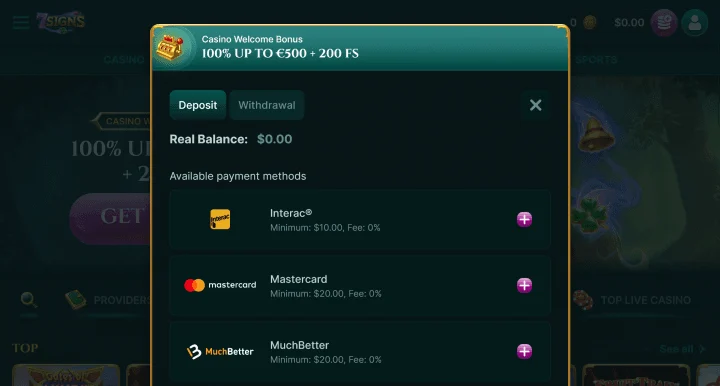
The cashier is where the account stops being theoretical and becomes concrete. Here the player decides how much to deposit, with which method, with what goal, and for how long they want the session to last. If this part is clear, the rest flows better. If, on the other hand, the cashier is accessed without a plan, the risk is turning a light evening into a series of increasingly improvised decisions.

Promo 3

Imagine the typical moment. The phone is already in hand, the account is open, the deposit screen is in front of you, and only then do you start wondering what amount makes sense. That's the wrong order. The amount should be chosen beforehand, away from the cashier, when the account is not yet influencing your mood.

The same applies to withdrawals. An orderly withdrawal requires reading the summary, checking the details, and making one well-formed request. A user who continuously refreshes the screen, repeats the action, or immediately sends a message to support without reading the history usually adds noise where there was only a slight delay.

The balance should also be interpreted calmly. It's not just a number that changes; it's a practical reference. It helps to understand if the initial plan is still the one decided at the beginning or if the session is taking a different direction.

Operational Phase

What The Player Does

Why It Matters

Useful Habit

First Deposit

Chooses the amount before opening the cashier

Reduces impulse

Define budget with a cool head

Method Selection

Usa a familiar tool

Makes movements more readable

Avoid unnecessary changes

Session Control

Rereads balance and recent movements

Helps not to repeat actions

Take a break after each step

Withdrawal Request

Checks amount and profile details

Cuts avoidable errors

Read the summary one more time

Daily Management

Updates reminders and limits

Keeps the pace under control

Review settings regularly

Phone Use And Short Sessions

The phone makes everything faster. This is its advantage, but also its risk. On desktop, the player tends to 'sit down to play'. On a smartphone, they log in while waiting for something, while resting, while filling a gap in the day. That's why the platform must be convenient, but the player must be even more organized.

Imagine a ten-minute visit before leaving home. If the goal is clear, the phone works well: open, check, make a choice, close. If, on the other hand, you enter without a specific purpose, the session easily slips from checking the balance to browsing the lobby, from the lobby to the game, from the game to the cashier.

When The Session Starts Without A Real Purpose

Many mobile sessions don't start with a real decision. They start because the phone is already open. Imagine checking messages, then opening your account almost automatically. At that moment, you're not really deciding to play, you're just following the easiest path. This is where a direct question is needed: why am I logging in now?

How to Truly End a Session

Ending doesn't just mean exiting the game. It means checking your balance, understanding if the initial plan was followed, and closing the platform entirely. Many users leave it open in the background, making it very easy to log back in a few minutes later, perhaps out of boredom or impulse.

Imagine finishing a session and returning to social media without properly closing your account. Ten minutes later, you find yourself back there, almost unintentionally. A simple exit routine - balance, final check, complete closure - helps prevent this automatic return.

Promocode 7signs Casino Nella Procedura

The promotional string should be treated as a technical step, not the emotional center of registration. Many users focus only on that field and ignore the rest of the screen, i.e., the moment to enter it, the logic of activation, and the relationship with the first deposit or account opening.

Imagine a player quickly copying a sequence and then moving on, without reading the summary. If something doesn't apply as expected, they won't know at which stage the error occurred. The most practical choice is to slow down: check the current screen, enter the string once, and read the result before proceeding.

Game Choice And Evening Pace

The game catalog isn't just for offering variety. It's primarily for allowing a choice consistent with the real time the player has available. If you have fifteen minutes, you should act like someone who has fifteen minutes, not like you have an entire evening ahead. This distinction, which seems obvious, is one of the most effective filters against disordered sessions.

Imagine logging in with little time and choosing an experience that requires more attention, continuity, or patience than you can give at that moment. The final feeling will almost always be one of haste, not entertainment. Choosing based on time, and not just impulse, makes the session much more readable.

Pace also matters mentally. Some evenings you want a simple, almost mechanical visit, and others you have more calm to explore. A good choice arises from the intersection of these two variables: available time and real mental state.

Promo Code 7signs 2026 And Practical Use

In 2026, the point isn't chasing every available promotional formula, but understanding if the activation truly fits your way of using the platform. A code might seem interesting and, at the same time, be unsuitable if it forces the player to stretch budgets, time, or session pace.

Imagine an evening where you just want to check your account and have a brief visit. If the activation pushes you to turn it into a long session, the theoretical advantage loses practical value. That's why sensible use starts with a clear question: does this promotion support my plan, or does it shift it?

Gaming Routine And Exit Point

A well-managed account isn't just measured by entry, but by how you exit. Having a defined exit point before starting is one of the simplest and most ignored habits. It can be a figure, a maximum time, or even a very concrete signal, for example, when you finish the budget set for the evening.

Imagine a player continuing just because they think 'a few more minutes' might fix the session's balance. Usually, it doesn't happen. It's much more useful to say the opposite: 'When I reach this point, I quit.' A simple, repeated rule is worth more than a generic promise of self-control.

Support, Verifications, And Break Tools

Support is useful when it receives precise information. A vague message describes the mood, not the problem. If, however, the player indicates the device used, the moment the error appeared, and the exact step where they got stuck, support already has a concrete basis to start from.

Imagine two users with the same problem. The first just writes that the account 'doesn't work.' The second explains if the problem appeared during login, checkout, or game startup. Almost always, the second user gets a faster and more useful response because it allows support to read the situation instead of guessing it.

Account verifications should be handled with the same logic. Not as a sudden annoyance, but as routine maintenance. If they arrive while you're in a hurry, they seem much heavier. If, however, you tackle them in a calm moment, carefully reading what's needed, they become just another administrative step.

Finally, there are the break tools. They work best when used early, not late. If you notice you're logging in too often, that the session is extending almost every evening, or that your phone is pulling you in without a clear choice, taking a short break might be the most useful decision of the week.

FAQ

The initial budget should be decided before opening the cashier, not while the payment screen is already in front of your eyes. The idea is simple: a figure chosen with a cool head remains more consistent than a figure invented in the heat of the action. Many players start better when they link the budget to available time and not just to the desire of the moment.

It's advisable to do it right after registration, before the first real session. At that stage, the mind is still neutral, not influenced by a win or a loss. If you wait too long, you risk turning the limits into an emotional reaction. If you set them immediately, they become a natural part of your routine.

Because the phone reduces the entry friction to almost zero and makes every step very light. You check your balance, look at the lobby, open a title, and time flies without a real stopping point. Without a clear purpose and without a decided exit point, the session almost always lasts longer than expected.

Immediately after, it's advisable to check personal data, security tools, the balance section, transaction history, and pause or reminder settings. This phase isn't the most exciting, but it's among the most useful. A player who knows where the essential functions are makes better decisions when the session gets intense.

The most effective way is to stop when a screen seems slow and check the history before touching again. Many errors don't stem from the system but from the player's impatience. If the transaction is already registered, repeating the action only worsens the confusion. Taking a few seconds' break often solves more than any hasty attempt.

It's useful when you have already read the screen carefully, checked the previous steps, and can explain what you were doing when the error occurred. Stating whether the problem appeared during login, checkout, or in a game makes the request much more concrete. Support works better when receiving practical details, not just frustration.

A break becomes sensible when you realize that entering the platform no longer stems from a clear decision but from an automatic habit. If you open the account out of boredom, if you often leave it open in the background, or if you almost always extend the session beyond the initial plan, taking a break for a while can restore distance and clarity.

EN